Age-related macular degeneration, explained simply
Sight loss that starts at the centre.
AMD is the leading cause of irreversible vision loss in people over 50 — and in its early stages you may not notice a thing. The good news: caught early, its progression can be slowed and sight can be saved.
196 million
people worldwide live with AMD today — projected to reach 288 million by 2040.
No. 1
cause of irreversible vision loss in adults over 50 in the developed world.
0 symptoms
in the early stage. By the time you notice changes, damage is already done.
The disease
What exactly is AMD?
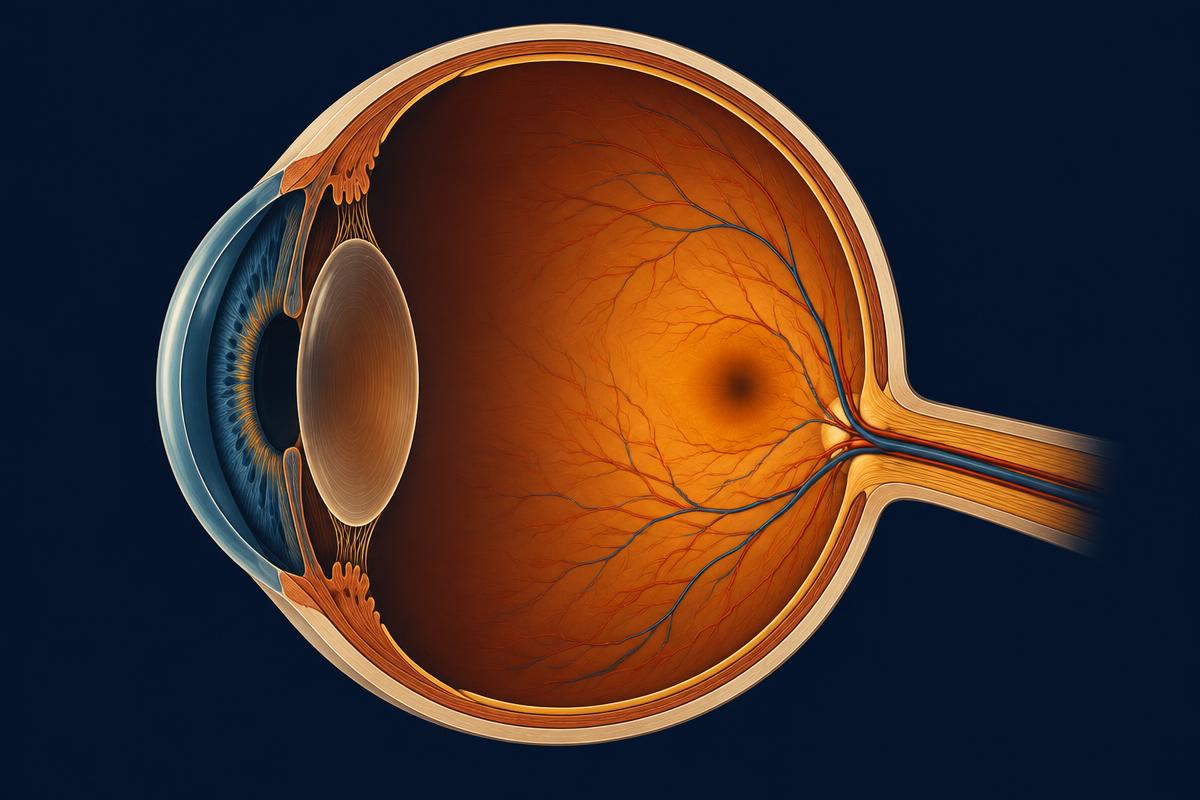
At the centre of your retina sits the macula — a spot the size of a grain of rice that gives you sharp, detailed central vision. AMD slowly damages it: reading becomes hard, faces blur, straight lines start to bend.
It comes in a slower "dry" form and a fast, aggressive "wet" form. Neither hurts — which is exactly why it often goes unnoticed until too much sight is lost.
See it for yourself
What the world can look like with AMD
Drag the slider. AMD doesn't darken the whole picture — it blurs, warps and erases the very centre, right where you look. Your peripheral vision stays, which is why many people don't realise what they're missing.
Illustrative simulation — every patient's experience is different.

Simulation of advanced AMD: the centre of the scene fades, blurs and bends while the edges stay sharp.
Warning signs
Six signs you should never ignore
Check each eye separately — AMD sneaks up on one eye while the other covers for it.
- Straight lines look wavy or bent
- A dark or empty patch in the centre of vision
- Colours seem faded or less vivid
- Faces are hard to recognise
- You need more light to read
- One eye adjusts slowly in dim light
Detection
One photo. A few seconds. Caught early.
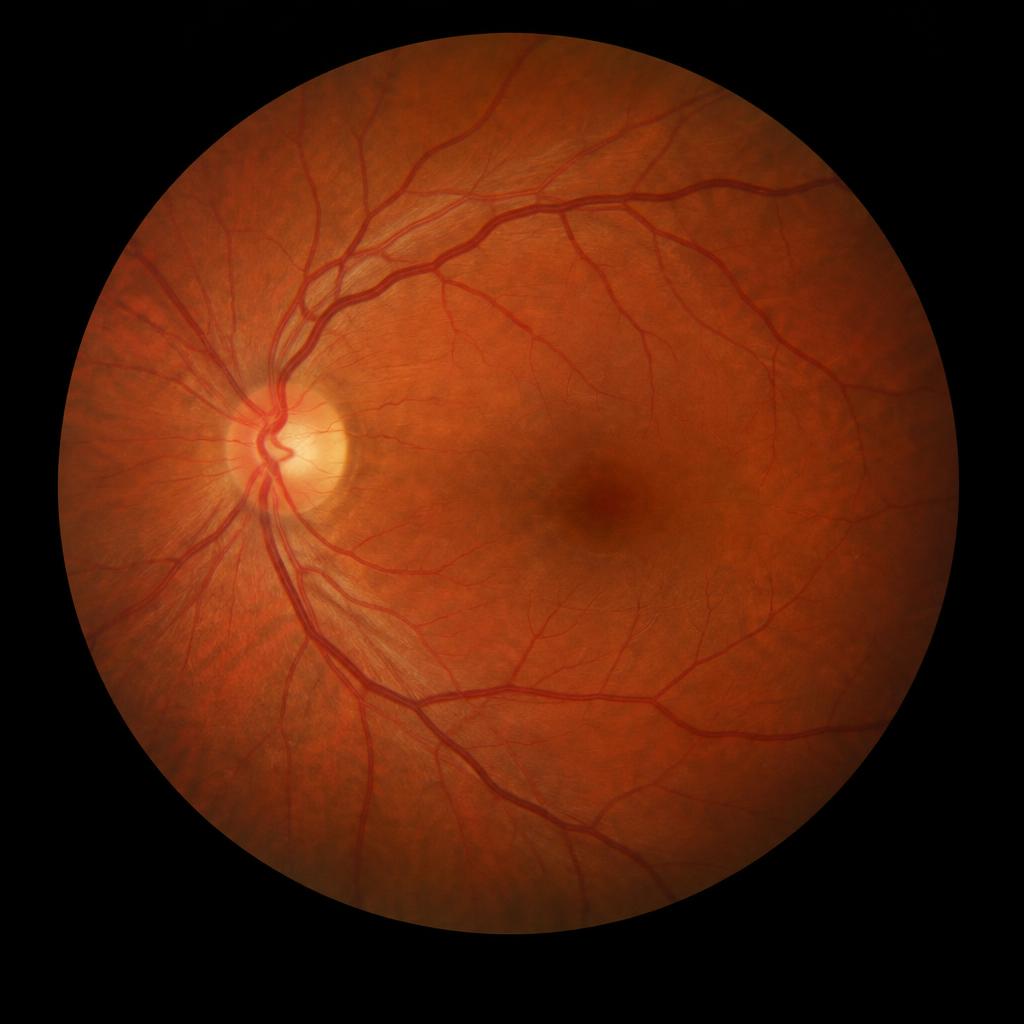
Modern screening is remarkably simple: a photograph of the back of your eye, taken in seconds by trained staff — no drops, no pain. Certified AI software reads the image on the spot and flags the earliest signs of AMD, long before you would notice them yourself.
An eye doctor then confirms the diagnosis and starts treatment or monitoring. Early detection is the single biggest factor in saving sight.
Over 50? Make an eye exam a habit.
If you smoke, if AMD runs in your family, or if you've noticed any change in your vision — don't wait. Ask your optician or eye doctor about a retinal photo with AI-based screening at your next visit.