Diagnosis
Finding AMD — often before you feel anything
AMD hides in the back of the eye, where a camera can see it. A quick exam or a single retinal photo reveals the earliest changes — and modern AI software can read that photo in seconds.
The toolkit
How doctors look for AMD
1. Comprehensive eye exam
Drops dilate the pupil so the doctor can look directly at your retina with a bright lens. Quick, painless, and the foundation of every check-up after 50.
2. Retinal photograph (fundus imaging)
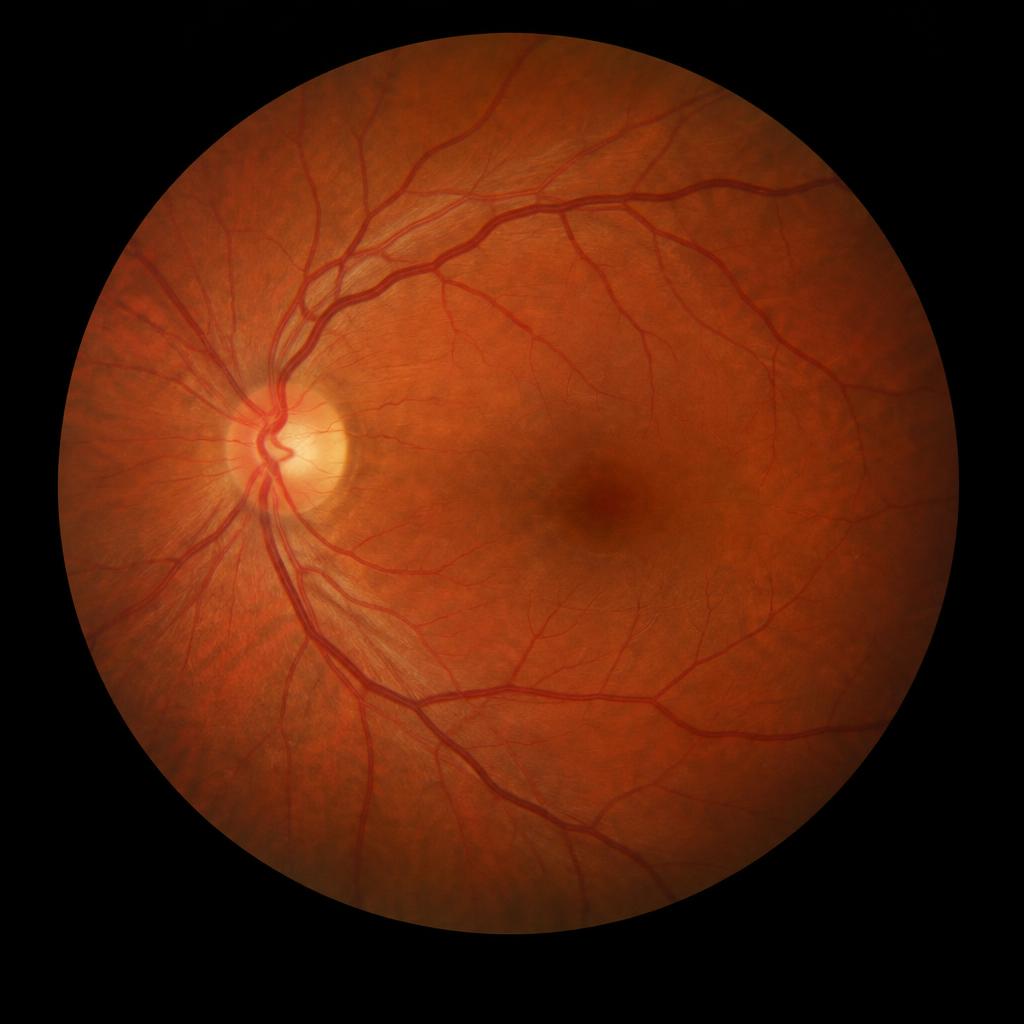
A camera takes a colour photo of the back of your eye in seconds — often without drops. The image documents your retina and can be compared visit to visit, or analysed by screening software.
3. OCT scan
Optical coherence tomography is an ultrasound-like laser scan that shows the retina's layers in cross-section. It reveals fluid and drusen in microscopic detail and is the standard for confirming and monitoring AMD.
4. Amsler grid self-check
A simple grid you check at home between visits — try it here. It catches new distortion, especially in the dry form, early enough to act.
AI screening
AI reads the photo while you're still in the chair
Trained staff — at an optician, clinic or screening event — take the retinal photo. Certified medical AI then analyses the image on the spot and reports whether there are signs of disease that need an ophthalmologist's attention.
The point isn't replacing doctors — it's availability. Screening no longer has to wait for a specialist's diary: it can happen wherever you are, in minutes, at a fraction of the cost. When the AI flags something, you get a fast, prioritised referral — exactly when treatment matters most.
AI used this way is a certified medical device (EU MDR Class IIb). It supports, but never replaces, the doctor's diagnosis.
Who should get screened
- Everyone from age 50 — even with perfect vision
- Smokers and former smokers, from age 45
- Anyone with AMD in the family
- People with diabetes or heart disease risk
- Anyone who has noticed vision changes
What to ask for at your next visit
Simply say: "Could you take a retinal photo and check it for macular degeneration?" Many opticians and clinics now offer AI-based retinal screening — a photo, a few seconds of analysis, and a clear answer on whether your macula looks healthy.